Last week, I accompanied two customers from Kazakhstan on a visit to LONGi’s factory. During our conversation, one of them raised an interesting question:
“Why is the product warranty only 12–15 years, while the power warranty lasts 30 years? Isn’t that misleading?”
I thought it was a very good question. After all, if you are investing in a solar power project, you naturally want to know how long your panels will last and what protection you actually get.
The answer comes down to one important difference: product warranty and power performance warranty cover two different things.
1. Product Warranty vs. Power Warranty
A solar panel consists of several components, including solar cells, glass, encapsulation materials, an aluminum frame and a junction box. All of them need to work together under outdoor conditions for many years.
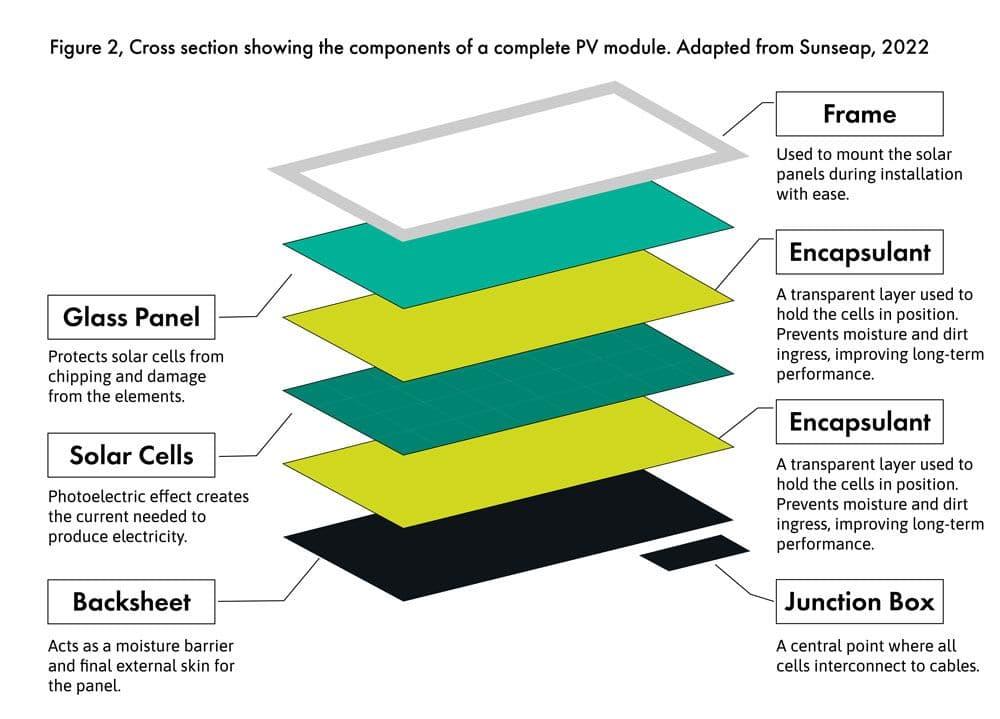
Product warranty mainly covers defects in materials and manufacturing.
For example:
- Delamination of encapsulation materials.
- Manufacturing-related bubbles or defects.
- Frame deformation caused by manufacturing issues.
- Defects in the junction box or electrical connections.
Depending on the manufacturer and product series, product warranties commonly range from 12 to 15 years, with some products offering longer coverage.
Power performance warranty is different. Solar panels naturally lose a small amount of power output over time due to sunlight exposure, heat, humidity and other environmental factors.
A power warranty guarantees that the module will maintain a certain percentage of its original rated power over a specified period, usually 25 or 30 years.
Simply put, one warranty protects the module’s materials and workmanship, while the other protects its long-term power output.
2. What Happens to Solar Panels After 25 or 30 Years?
Let’s take a 600W solar panel as an example.
Its output will gradually decrease over time. This is called solar panel degradation.
For illustration, if a module retains 88% of its original rated power after 30 years, it can still deliver approximately 528W.
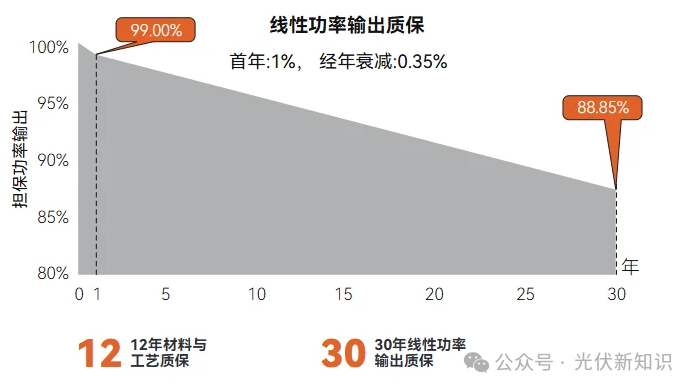
That is still a considerable amount of power.
The actual degradation rate depends on the module technology and manufacturer’s warranty terms.
More importantly, a 30-year power warranty does not mean the panel will stop working after 30 years. It simply defines the period during which the manufacturer guarantees a certain level of performance.
3. Does a 25-Year Lifespan Mean Solar Panels Stop Working?
Not at all.
China’s national standard GB 55015-2021 specifies that the design service life of photovoltaic modules should exceed 25 years.
However, this is a design requirement, not an expiry date.
There is an interesting example from China’s early solar industry.
In 1983, a 10kW solar power station was built in Yuanzicha Village, Gansu Province. According to a 2023 report, the system was still generating electricity after 40 years of operation, with approximately 7kW of remaining capacity.
This example reminds us that warranty periods and actual service life are not the same thing.
Of course, the actual lifespan of a solar installation depends on product quality, installation, maintenance and operating conditions.
4. What Should Buyers Look at Before Purchasing Solar Panels?
From our experience working with international solar customers, we believe there are several things worth checking beyond the initial price and wattage:
- Product warranty: What defects are covered, and for how long?
- Annual degradation rate: How much power does the module lose each year?
- Manufacturer reliability: Can the manufacturer provide long-term technical and warranty support?
- Environmental suitability: Can the module handle the project’s local climate?
This last point is particularly important for projects in the Middle East and Central Asia, where high temperatures, dust, strong UV exposure and large temperature differences can affect module performance.
5. So, Is a 30-Year Power Warranty Meaningful?
Let’s return to our customer’s question.
Yes, it is meaningful, but it should not be considered the only factor when choosing solar panels.
A longer power warranty provides greater confidence in long-term performance. However, product quality, manufacturing standards and the manufacturer’s ability to honor its commitments matter just as much.
At Joinsun, we believe choosing solar modules should be about more than comparing prices and wattage.
A good solar panel is not simply one that performs well when it leaves the factory. It should continue to deliver reliable energy year after year.
If you are planning a solar project, feel free to contact our team. We would be happy to discuss suitable module options for your project.