Global Certification Guide Released to Navigate Solar Panel Market Access
As the global demand for renewable energy continues to surge, Chinese manufacturers are actively expanding their overseas markets for photovoltaic products. To clarify complex international regulations, Relno Standards, a leading certification consultancy, has released a comprehensive guide titled “Global Certification Overview for Solar Photovoltaic Products,” detailing mandatory requirements for key markets from India and Australia to Saudi Arabia and Israel.
Solar energy products:
- BIS certification from India
- ALMM certification from India
- ESDM certification from Indonesia
- CEC certification from Australia
- SABER certification from Saudi Arabia
- DEWA certification from Dubai
- Fire safety certification from Singapore
- SIRIM certification from Malaysia
- INMETRO certification from Brazil
- IRAM certification from Argentina
- RETIE certification from Colombia
- SEC certification from Chile
- MCS certification from the UK
- SII certification from Israel
The guide underscores that countries have established distinct and often stringent mandatory certification schemes for importing solar panel products. The Indian market, for instance, presents a rigorous two-step process. To export a solar panel to India, manufacturers must first obtain BIS (Bureau of Indian Standards) registration, followed by an ALMM (Approved List of Models and Manufacturers) listing. The guide emphasizes that the ALMM process involves factory inspections, requiring companies to plan at least six months in advance to ensure their solar panel production quality systems meet the standard.
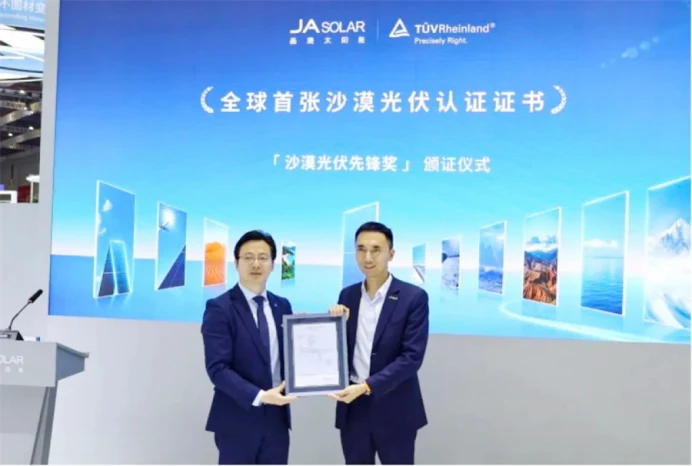
In the Middle East, Saudi Arabia’s SABER certification is now mandatory for customs clearance. Exporters must secure a Product Certificate (PC) for each type of solar panel model and a Shipment Certificate (SC) for every consignment.
Meanwhile, in Australia, a solar panel must be listed by the Clean Energy Council (CEC) to be eligible for government rebates, a key factor influencing consumer choice.
South American markets also have critical requirements. Brazil’s INMETRO certification includes specific energy efficiency labeling for solar panel products, while Chile’s SEC authorization must be held by a local entity. The guide also notes that any solar panel exported to Colombia must bear labels in Spanish.
An expert from Relno Standards commented that navigating this complex regulatory landscape is crucial for success. “For Chinese solar panel manufacturers, understanding and complying with international certification standards is a strategic imperative. Proactively certifying high-quality solar panel products is essential to mitigating trade risks and enhancing global competitiveness,” they stated.
This newly released guide serves as a practical roadmap, empowering solar panel and related PV manufacturers to seize opportunities in the worldwide green energy transition.