Shipping Solar Panels Internationally: How to Avoid Damage & Delays
Shipping solar panels across countries can be risky. One of the biggest problems companies face is solar panel damage during transport. Panels are fragile, heavy, and made of glass, which makes them easy to break if they are not handled the right way. Many people think solar panel damage happens during use, but in most cases, it happens before the panels are even installed.
Solar panel damage can lead to broken glass, hidden cracks, delays at ports, and big money losses. It can also cause warranty issues and unhappy customers. When panels arrive damaged, projects stop and costs go up fast.
This guide explains what causes solar panel damage during international shipping and how to prevent it. You will learn about packing, loading, paperwork, and simple steps that help keep solar panels safe from the factory to the job site.
What Is Solar Panel Damage and Why It Happens in Transit
Solar panel damage means any harm that happens to a solar panel before it is installed and used. This damage often happens during shipping, loading, unloading, or storage. Because solar panels are made of glass and thin parts, they can break or crack easily if they are handled the wrong way.
Most solar panel damage happens while panels are being moved from one place to another. Forklifts, cranes, trucks, ships, and warehouses all play a role. Even small mistakes can cause big problems. A hard stop, a drop, or tight straps can damage panels without anyone noticing right away.
International shipping increases the risk of solar panel damage. Panels travel long distances and pass through many hands. They are lifted, stacked, and moved several times. Changes in weather, humidity, and temperature can also weaken panels during long trips.
Many times, solar panel damage cannot be seen when the panels arrive. Cracks inside the cells may only show up months later when the system stops working well. That is why preventing damage during transit is so important.
Most Common Types of Solar Panel Damage During Shipping
Solar panel damage can happen in different ways during shipping. Some damage is easy to see right away, while other damage stays hidden until the panels are used. Knowing the most common types of damage helps companies prevent problems before they happen.
Broken Glass and Bent Frames
Broken glass is the most visible type of solar panel damage. It often happens when panels are stacked the wrong way or when heavy weight is placed on top of them. Forklift pressure and rough handling can also bend the metal frame. Once the glass or frame is damaged, the panel usually cannot be used.
Microcracks Inside the Solar Cells
Microcracks are small cracks inside the solar cells that cannot be seen with the eye. This type of solar panel damage is very common during shipping. Vibration, shaking, and bending during transport can cause these cracks. Over time, microcracks reduce power output and can cause the panel to fail early.
Moisture and Water Damage
Moisture is another major cause of solar panel damage. During sea shipping, water can enter containers through humidity or leaks. Salt air and water can slowly damage the panel parts. This type of damage may not show up right away but can shorten the life of the solar panel.
How Improper Packaging Causes Solar Panel Damage
Bad packaging is one of the main reasons solar panel damage happens during shipping. Even strong panels can break if they are packed the wrong way. Many shipping problems start before the panels ever leave the warehouse.
One common mistake is packing solar panels flat instead of upright. Flat packing allows weight to press down on the glass. This can cause cracks and bending during transport. Upright or vertical packing helps spread weight evenly and lowers the risk of solar panel damage.
Another issue is poor edge and corner protection. The edges of solar panels are the weakest parts. Without strong guards, panels can chip or crack when they hit other objects. Loose packing also allows panels to move, which leads to rubbing and impact damage.
Straps can also cause solar panel damage if they are too tight. Tight straps push pressure into the glass instead of the pallet or crate. Weak pallets and poor-quality boxes make the problem worse and increase the chance of damage during long trips.
Best Packaging Methods to Prevent Solar Panel Damage
Good packaging is the best way to reduce solar panel damage during international shipping. When panels are packed the right way, they are much safer during handling and transport.
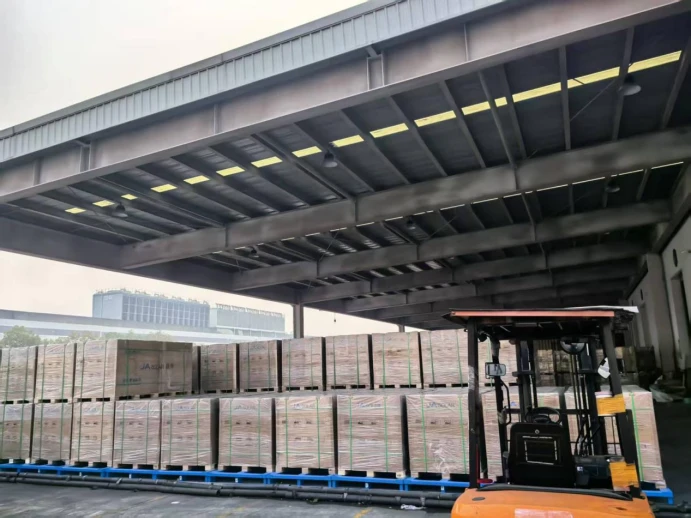
Using manufacturer packaging is always the best option. These packages are designed to protect solar panels during long trips. They often include strong pallets, spacers, and clear handling marks. Insurance companies also trust this type of packaging more.
Vertical packing is one of the most effective ways to prevent solar panel damage. When panels are packed upright, there is less pressure on the glass. Spacers between panels stop them from touching each other. Strong corner and edge guards protect the weakest areas of the panel.
Export pallets should be strong and treated for international shipping. Heat-treated pallets prevent delays at customs and keep loads stable. Adding shock and tilt indicators also helps reduce rough handling and makes it easier to prove damage if problems happen.
Container Loading Mistakes That Lead to Solar Panel Damage
Even with good packaging, solar panel damage can still happen if containers are loaded the wrong way. Many problems occur at ports and warehouses during loading and unloading.
One major mistake is leaving empty space inside the container. When pallets are not secured, they can slide or tip during the journey. This movement causes impact and vibration, which increases the risk of solar panel damage. All pallets should be blocked and braced so they cannot move.
Another issue is mixing solar panels with heavy or loose cargo. Heavy items can shift and press against the panels. This can crack the glass or bend frames. Solar panels should be shipped alone or separated from other goods.
Moisture control is also important. Containers can collect water during long sea trips. Without moisture control, humidity can build up and damage panels over time. Using liners and drying packs helps protect solar panels from water-related damage.
How Customs and Documentation Errors Increase Solar Panel Damage Risk
Paperwork problems can also lead to solar panel damage, even though the panels are packed well. When documents are wrong or missing, shipments can get stuck at ports for days or even weeks.
Delays increase the risk of solar panel damage because panels sit in hot, wet, or dusty areas. Containers may be opened for inspection and then handled again. Each extra move raises the chance of drops, vibration, or poor stacking.
Wrong product descriptions or incorrect shipping codes often cause inspections. Customs officers may open crates or pallets to check the cargo. If panels are not repacked the right way, damage can happen during this process.
Clear and correct paperwork helps solar panels move faster through customs. When shipments pass smoothly, panels spend less time in storage and face less handling. This greatly lowers the risk of solar panel damage during international shipping.
Insurance, Claims, and Financial Loss from Solar Panel Damage
When solar panel damage happens, the cost can be very high. Broken panels, delayed projects, and extra shipping fees can hurt both sellers and buyers. This is why insurance is important, but it does not always guarantee payment.
Many insurance claims for solar panel damage are denied. This often happens when packaging is weak or handling rules are not followed. Insurance companies may say the panels were not packed well enough for long travel.
Good records help protect your business. Photos taken before loading, during loading, and at delivery can prove when the solar panel damage happened. Shock and tilt indicators also help show rough handling during transport.
Checklist to Prevent Solar Panel Damage in International Shipping
Using a simple checklist can greatly reduce solar panel damage during shipping. These steps help make sure panels stay safe from the factory to the final delivery point.
- Use manufacturer-approved or export-grade packaging
- Pack solar panels in a vertical position, not flat
- Add strong edge and corner protection
- Use spacers so panels do not touch each other
- Avoid over-tight straps that press on the glass
- Use strong, heat-treated pallets for export
- Secure pallets inside the container so they cannot move
- Keep solar panels separate from heavy cargo
- Add moisture control items inside the container
- Label pallets clearly with handling instructions
Frequently Asked Questions About Solar Panel Damage
What is the most common cause of solar panel damage?
The most common cause of solar panel damage is poor handling during shipping. This includes bad packaging, rough forklift use, and loose cargo inside containers. Pressure on the glass and strong vibration also cause many problems.
Can microcracks cause long-term solar panel damage?
Yes, microcracks can cause serious solar panel damage over time. These cracks often cannot be seen at delivery. As the panel is used, power output drops and the panel may fail earlier than expected.
Does shipping insurance cover solar panel damage?
Shipping insurance can cover solar panel damage, but only if packing and handling rules are followed. Claims may be denied if the panels were packed poorly or handled against safety guidelines.
How can buyers detect hidden solar panel damage?
Buyers can use visual checks, performance testing, and special scanning tools to find hidden solar panel damage. Early testing helps prevent future system failures.
Conclusion
Solar panel damage during international shipping is a serious problem, but it can be avoided. Most damage happens because of poor packaging, rough handling, container movement, or long delays at ports. These issues are common, but they are also preventable.
When companies plan ahead and follow best practices, solar panels arrive safely and on time. Preventing solar panel damage protects your investment, keeps projects on schedule, and builds trust with customers.
Need help preventing solar panel damage in your next shipment? Contact Joinsun today to get expert support, safe packaging solutions, and reliable global delivery.