The Difference Between Inexpensive and High-Quality Solar Panels: Why Choose Grade A
Not all solar panels are created equal, even if they look identical and promise similar wattage. The real difference comes down to the materials, how they’re made, and how long they actually last.
Grade A panels use defect-free cells with strict quality controls. Cheaper panels usually contain flaws that chip away at efficiency and lifespan.
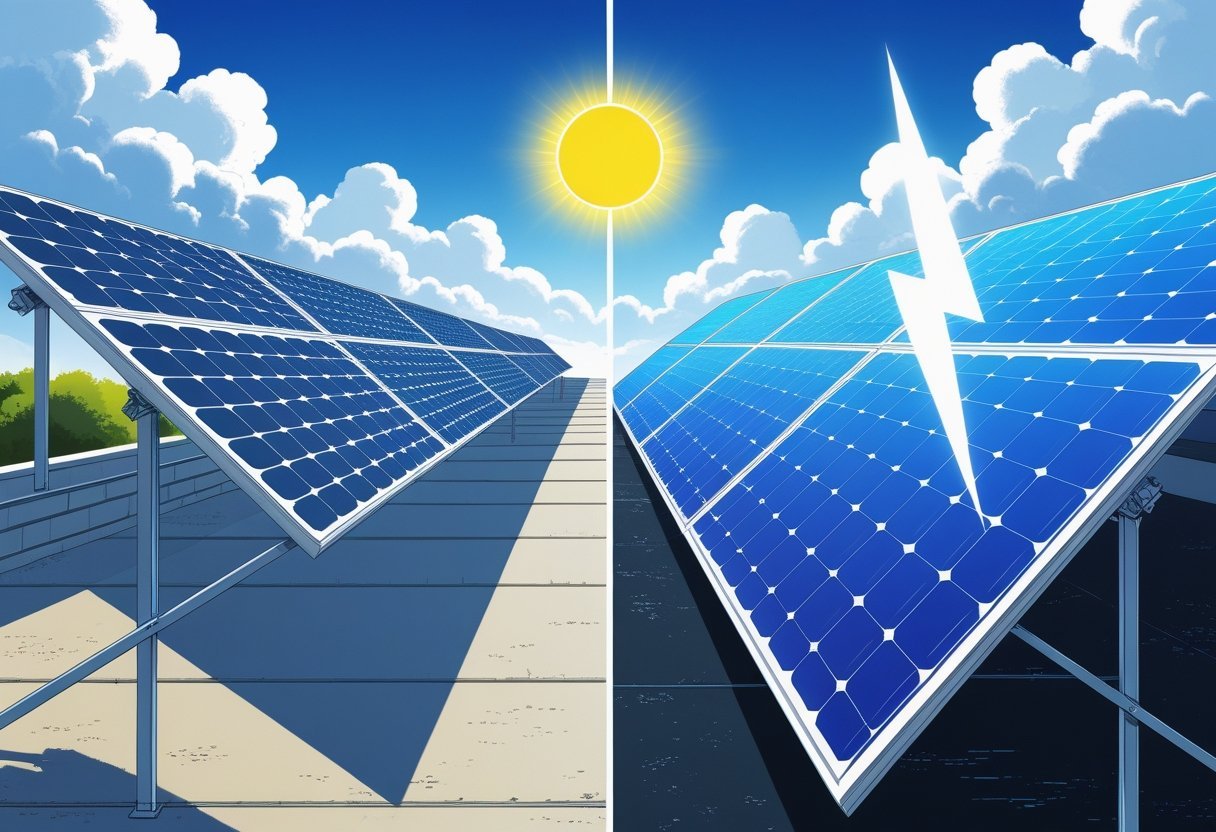
Budget panels might save you money upfront, but they tend to lose performance faster. Shorter warranties and higher replacement costs can sneak up on you later.
High-quality panels degrade slowly and keep producing reliable power for 25 years or more. Cheaper options might fail within 5 to 10 years or lose output much faster than you’d expect.
Understanding these differences helps you make a smarter choice for your home or business. You’re not just buying gear—you’re investing in decades of power generation.
The panel grade you pick will decide how much energy you get and how much you actually save. It’s a bigger decision than it seems.
Key Takeaways
- Grade A panels offer better long-term performance and durability compared to cheaper alternatives
- Lower-quality panels degrade faster and often lack proper warranties or support
- Investing in high-quality solar panels provides better return on investment over their 25-year lifespan
What Makes a Solar Panel Inexpensive or High-Quality?
The gap between inexpensive and high-quality solar panels starts with the materials, the grade of solar cells, and the tech behind them. These details shape how well your panels perform and how long they stick around.
Construction Materials and Manufacturing Standards
High-quality solar panels use premium materials that can handle wild temperature swings. Solar panels face thermal stress from 150–160°F in summer down to 25–30°F in winter.
Premium panels include inner expansion joints, so they expand and contract without cracking. Inexpensive panels often skip these protective features, which leads to cracked power feeds and lower energy production as time goes on.
The frame quality matters too. Better panels use corrosion-resistant aluminum frames and tempered glass that stands up to hail and wind.
Manufacturing standards really separate the good from the bad. Top manufacturers put panels through hundreds of thermal cycles and mechanical stress tests.
Budget panels might pass basic certifications, but they can fail under real-world conditions. That’s not something you want to find out after a storm.
Cell Grades: Grade A, B, and C Explained
Solar cells get ranked by quality, with Grade A at the top. Grade A cells have no visible defects, a consistent color, and uniform performance.
Grade A solar panels use only these premium cells for max efficiency and reliability. Grade B cells have minor cosmetic defects—maybe a little discoloration or a chip here and there.
These flaws can cut efficiency by 5-10% and might get worse over time. Grade C cells have visible damage, big color variations, or performance issues.
Inexpensive solar panels often mix in Grade B or C cells to keep costs down. You might not notice at first, but these panels degrade faster—losing 1 to 2 percent of efficiency each year, compared to just 0.25 percent for premium panels.
Types of Solar Panel Technologies
Monocrystalline panels use single-crystal silicon and hit the highest efficiency (18–24%). They cost more but take up less roof space and work better in low light.
Most high-quality solar panels use this tech. Polycrystalline panels use multi-crystal silicon and come cheaper, but with lower efficiency (15–18%) and a blue-speckled look.
These work fine for big roofs where space isn’t tight. Thin-film solar panels are the cheapest but need a lot more space.
They handle heat and shade better, but they degrade faster than crystalline panels. Some newer tech, like heterojunction technology, blends cell types to push efficiency past 22%, but those premium panels definitely cost more.
Performance and Longevity: Comparing Inexpensive and High-Quality Panels
High-quality solar panels deliver better performance and last longer than budget options. You see this in efficiency ratings, degradation rates, and weather resistance.
These performance gaps really add up over 25+ years, and they hit your energy savings and ROI directly.
Panel Efficiency and Power Output
Solar panel efficiency is about how much sunlight turns into usable electricity. High-quality panels usually hit 20–23% efficiency, while cheaper ones land between 15–17%.
This difference matters more than you might guess. A 20% efficient panel produces about 15–20% more power output than a 15% efficient panel of the same size.
If you’re short on roof space, this means you might need fewer high-quality panels to meet your needs. Key efficiency differences:
- Premium panels: 20–23% efficiency, 400–450 watts per panel
- Budget panels: 15–17% efficiency, 300–350 watts per panel
- Power output: A 400-watt premium panel can power a refrigerator for a day
Temperature plays a role, too. Quality panels have better temperature coefficients around -0.3%, while cheaper panels lose efficiency faster at -0.5% per degree above 77°F.
On hot summer days, premium panels keep cranking out power when you need cooling most.
Panel Degradation and Annual Loss
All solar panels lose some efficiency over time, but the rate swings a lot between quality levels. Premium panels degrade at 0.5% annually, while budget ones might lose 0.7–1.0% each year.
This annual degradation adds up. After 25 years, a high-quality panel keeps about 88% of its original output. A budget panel at 1% degradation drops to 78% output over the same period.
25-year performance comparison:
| Panel Type | Annual Degradation | Output After 25 Years |
|---|---|---|
| High-Quality | 0.5% | 88% |
| Budget | 1.0% | 78% |
Your long-term output really suffers with cheaper panels. If your system starts at 10,000 kWh yearly, premium panels will make about 8,800 kWh in year 25.
Budget panels drop to 7,800 kWh—that’s 1,000 kWh less every year, costing you hundreds in lost savings. Ouch.
Durability Under Real-World Conditions
High-quality panels stand up to weather extremes thanks to better materials and construction. Premium panels use tempered glass rated for hail up to one inch at 50 mph.
Budget options often crack or fail under similar impacts. Weather resistance testing shows big differences—quality panels handle snow loads up to 5,400 pascals and winds over 140 mph.
Cheaper panels might only meet minimum certification, leaving them at risk during storms. Durability advantages of premium panels:
- Corrosion-resistant frames for coastal areas
- UV-resistant materials to prevent long-term breakdown
- Reinforced junction boxes to keep out moisture
- Anti-reflective coatings for steady performance
Temperature swings stress connections and materials every day. Premium panels have bypass diodes to prevent hot spots and tough seals to block moisture.
Budget panels skip these details, which leads to earlier failures and lower energy production. It’s just not worth the headache.
Financial Impact: Cost, Value, and Warranty
The financial side of solar panels goes way beyond the sticker price. Cost per watt, warranty coverage, and long-term savings all shape the real value you get.
Solar Panel Cost Versus Cost per Watt
Solar panel prices bounce all over, depending on quality and efficiency. Inexpensive panels usually cost $0.70 to $1.00 per watt, while high-quality ones range from $1.00 to $1.50 per watt.
This difference matters more than it seems. A 6kW system with budget panels might set you back $4,200 to $6,000 for the panels alone. The same system with premium panels costs $6,000 to $9,000.
But that upfront price gap doesn’t tell the whole story. High-quality panels squeeze more electricity from the same roof space.
A premium 400-watt panel matches the output of two 200-watt budget panels but only takes up half the area. You need fewer high-efficiency panels to hit your energy goals, which can actually lower your installation costs for racking and labor.
Cost per watt really means something when you factor in degradation. Budget panels might degrade at 0.8–1.2% annually, while premium ones lose just 0.5% per year.
Over 25 years, that gap adds up to thousands of dollars in lost energy production. Don’t let those little numbers fool you.
Warranties and Manufacturer Support
Product warranty and performance warranty protect your investment in different ways. The product warranty covers manufacturing defects—usually 10 to 12 years for budget panels, 25 years for premium ones.
Performance warranty guarantees a minimum energy output over time. Budget panels often promise 80% efficiency after 25 years. Premium panels guarantee 85% to 90% after the same stretch.
Warranty Comparison:
| Panel Type | Product Warranty | Performance Warranty | Year 25 Efficiency |
|---|---|---|---|
| Budget | 10-12 years | 25 years | 80% |
| Premium | 25 years | 25-30 years | 85-90% |
Grade A solar panels typically come with solid manufacturer support—responsive customer service and straightforward claims. Budget manufacturers might offer limited help or even disappear before your warranty is up.
A warranty means nothing if the company’s not around to back it up. That’s just reality.
Return on Investment Over Time
Your return on investment really depends on how much energy your system produces over its lifetime. Let’s say you install a budget 6kW system for $15,000—you might save about $1,200 per year on electricity.
That payback period lands at around 12.5 years. If you go for a premium 6kW system at $20,000, you’ll get 10% to 15% more energy because of higher efficiency and slower degradation.
That translates to roughly $1,500 in annual savings, so your payback stretches to about 13.3 years. The difference in payback time isn’t massive up front.
But after the payback period, premium panels start to pull ahead. They keep producing more electricity through years 15 to 30, while budget panels drop off faster.
By year 25, budget panels running at 80% efficiency just can’t keep up with premium panels at 88%. This efficiency gap can mean $5,000 to $8,000 more in savings over the system’s lifetime.
Repair costs matter too. Budget panels tend to need more repairs or even early replacements, which eats into your savings.
Solar Incentives and Savings
Solar incentives apply to your total system cost, no matter what panels you pick. The federal Investment Tax Credit gives you 30% back on your installation through 2032.
State and local rebates can add anywhere from $500 to $5,000 in savings. So, a $15,000 budget system gets you $4,500 from the federal tax credit, while a $20,000 premium system nets $6,000.
After incentives, your out-of-pocket costs drop to $10,500 for budget and $14,000 for premium. Net metering programs can also help—if your panels generate extra electricity, you get credits.
Higher efficiency panels make more excess energy, so you rack up more credits. Some utilities pay retail rates, others only pay wholesale, so check the details.
Quality installations boost your property value, too. Homes with premium solar panels often sell for 3% to 4% more than similar homes.
Budget systems might add less value because buyers know they’ll probably need to replace them sooner. The $5,000 price difference between systems doesn’t look like much when premium panels can add $12,000 to $15,000 to your home’s value.
If you live in a state with Solar Renewable Energy Credits (SRECs), you can get paid for your clean energy production. More efficient panels generate more SRECs, bringing in extra income that budget panels just can’t match.
Why Grade A Solar Panels Are the Best Choice
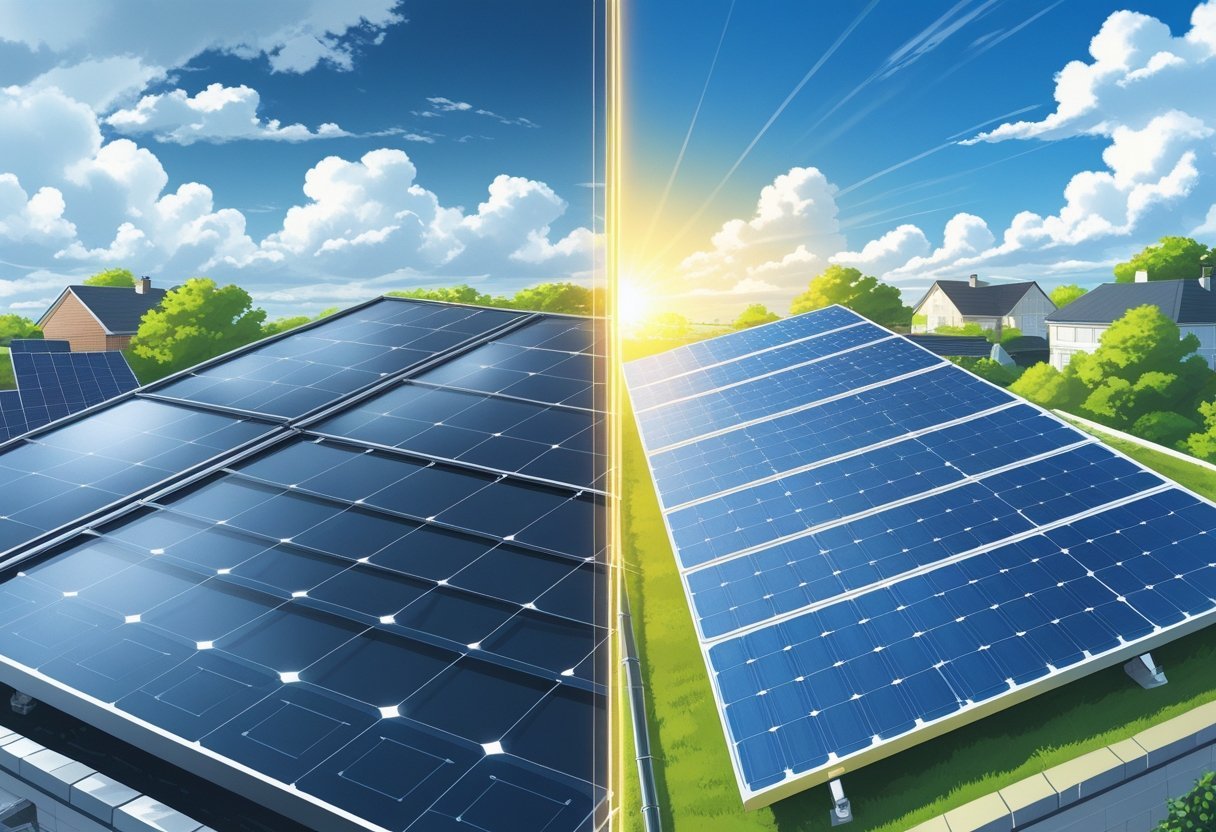
Grade A solar panels give you steady power output, last longer, and actually back up your investment with real warranties. Sure, they cost more up front, but they save you money over the long haul with reliable performance and barely any degradation after 25+ years.
Benefits of Choosing Grade A Panels
Grade A solar panels keep their efficiency year after year. You’ll lose less than 0.5% power annually, so your system keeps running close to its rated output for decades.
The warranty coverage is real and enforceable. These panels come with 25-year performance guarantees from reputable manufacturers. If your panels underperform, you can actually do something about it.
The cells inside Grade A panels have no micro-cracks or hidden defects. That matters, because hidden damage leads to faster breakdown and weird power drops. You avoid early failures and surprise replacement costs.
Your home solar system will need less maintenance. Grade A panels stand up better to weather and keep their structure intact. You’ll spend less time and money fixing things.
Even your home’s resale value gets a boost. Buyers will pay more for a house with a quality solar setup. Low-quality panels can actually turn buyers off.
Best Brands and Manufacturers
Some manufacturers consistently produce Grade A solar panels. Canadian Solar offers reliable panels with strong warranties and durability in all kinds of climates.
Maxeon makes some of the highest-efficiency panels out there. Their tech delivers more power per square foot, which is a big deal if you’ve got limited roof space.
REC panels are known for low degradation rates. Their products keep performing well past the 25-year mark.
When you shop for home solar, check the manufacturer’s certifications. Look for IEC and local safety standards. See how long the company has been around and whether they’ll be there to honor your warranty.
Skip brands that won’t clearly state their panel grade. If a manufacturer dodges the Grade A question, assume it’s not Grade A.
Making an Informed Decision for Home Solar
Think about your actual costs over 25 years, not just the install price. Cheap solar panels that degrade at 2% per year will crank out way less power than Grade A panels by year 10.
Ask your installer for documentation. Specifically, ask for Grade A confirmation and manufacturer certifications. A good installer won’t hesitate to show you this stuff.
Compare total energy output projections. Your installer should provide realistic production estimates based on Grade A degradation rates. If the numbers sound too good, maybe they are.
Factor in your energy needs and roof situation. If you need maximum output from limited space, Grade A panels from Maxeon or similar brands give you more power per panel.
Get a few quotes, but don’t just grab the lowest bid. The cheapest offer often means they’re cutting corners on panel quality. Your solar investment should last decades, not just a few years.
Frequently Asked Questions
Solar panel quality depends on materials like cell grade and frame construction. Pricing differences reflect real variations in efficiency, degradation rates, and warranty coverage that affect your long-term costs.
What are the primary factors that determine the quality of solar panels?
The quality of the solar cells matters most. Grade A cells have no visible or technical defects and perform at their best. Lower grades come with imperfections that drag down energy conversion.
Frame materials play a big role too. High-quality frames use anodized aluminum that doesn’t warp or crack with temperature swings. Cheap frames can buckle or break in bad weather.
The EVA encapsulant protects the solar cells from damage. Premium EVA layers have strong UV resistance and stay clear for years. Low-quality EVA turns yellow and cloudy, blocking sunlight and cutting power output.
How do longevity and durability compare between low-cost and high-end solar panels?
Premium solar panels with Grade A cells degrade at about 0.3% to 0.5% per year. After 10 years, these panels still run at around 95% of their original capacity. That’s steady power for decades.
Budget panels degrade much faster. Some lose 10% of their efficiency in less than two years. That means you’ll produce less electricity and need to replace them sooner.
Temperature extremes beat up solar panels over time. They face 150 to 160 degrees in summer and dip to 25 to 30 degrees in winter. Quality panels use expansion joints to handle these swings without cracking.
Can investing in premium solar panels lead to significant savings over time?
High-quality panels cost more up front, but they save you more over their lifespan. A well-built system can save up to $10,000 over 30 years compared to low-quality options. You get steady power and avoid replacements.
Installation costs stack up fast when you have to swap out failing panels. Some companies have replaced underperforming panels twice in four years. Each replacement means paying for new panels, shipping, and labor—sometimes as much as the panels themselves.
Your property value gets a boost from quality panels. A reliable solar system that delivers steady power adds to your home’s worth and makes it more appealing to buyers.
What performance differences should consumers expect when choosing between economy and top-tier solar panels?
Top-tier panels keep their rated output for years. You actually get the power you planned for when sizing your system. That consistency keeps your electric bills steady and low.
Budget panels can start strong but fade fast. Some systems lose 9% in less than two years. That drop means you either pay more for grid electricity or need to add more panels to keep up.
Materials in premium panels resist environmental damage better. Quality EVA stays transparent, letting sunlight reach the cells. Cheap EVA clouds up, blocking light—even if the cells still work.
In terms of energy efficiency, how do low-priced solar panels stack up against premium models?
Energy efficiency ties directly to cell quality and construction. Grade A cells convert sunlight at their designed rate with almost no losses. Lower-grade cells have defects that hold them back right from the start.
Premium panels use materials that keep efficiency high over time. The protective layers stay clear, and the cells hold tight in their frames. So, the efficiency you start with stays pretty close for decades.
Low-priced panels often use cheaper silicon and lower-grade stuff. They might perform okay when new, but they fall off faster. Microcracks and corrosion chip away at how much sunlight turns into power.
What warranty and maintenance considerations should be taken into account when selecting solar panels?
Premium solar panels usually come with 30-year power warranties. That kind of coverage tells you the manufacturer stands behind their product for the long haul.
If something goes wrong—like a sudden drop in output or a panel just up and fails—you’re not left paying out of pocket. It’s a bit of peace of mind, honestly.
Budget panels? They often have shorter or more limited warranties. When the warranty’s brief, it kind of hints the manufacturer isn’t so confident in the panel’s lifespan.
You might end up shouldering the cost of repairs or replacements sooner than you’d like. That’s a risk worth weighing.
Before you buy, you can ask for detailed quality reports. A Bill of Materials report spells out exactly what went into your panels—no mystery ingredients.
And don’t forget about electroluminescence testing. It can spot hidden microcracks that could cause headaches down the road.