Types of Solar Panels: Which Solar Panel Types Are Right for You?
Solar energy is one of the best ways to lower your power bill and use clean energy. But before you go solar, it is important to understand the types of solar panels available today. Many people think all solar panels are the same, but that is not true.
There are different solar panel types, and each one works a little differently. Some panels make more power in small spaces. Some work better in hot weather. Others cost less but need more room on your roof. Choosing the right panel can help you save more money over time.
In this guide, you will learn about the main types of solar panels, how they work, and which solar panel types are best for different homes.
Types of Solar Panels Explained (Quick Comparison)
When people talk about the types of solar panels, they usually mean how the panels are made and how they produce power. Understanding the main solar panel types makes it much easier to choose the right one for your home.
Today, there are three main types of solar panels used for homes and businesses:
- Monocrystalline solar panels
- Polycrystalline solar panels
- Thin-film solar panels
Each of these solar panel types has its own strengths and weaknesses. Some panels are better for small roofs. Others are better for large spaces or special roofs.
Monocrystalline panels are the most popular choice today because they produce more power in less space. Polycrystalline panels are older and usually cost less but need more room. Thin-film panels are lighter and flexible but usually produce less power.
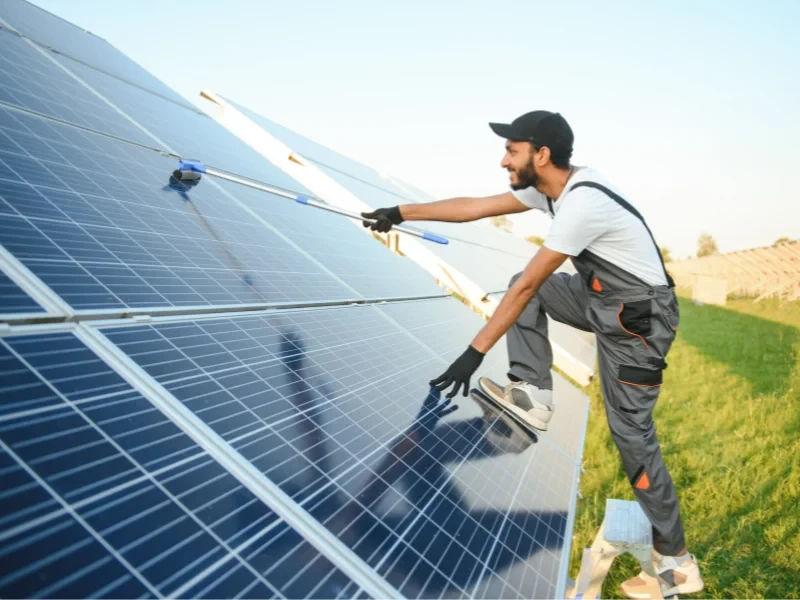
Monocrystalline Panels (Mono): The Most Popular Solar Panel Type
Monocrystalline panels are the most common and widely used option among all types of solar panels today. These panels are made from a single piece of pure silicon, which helps them produce more electricity from sunlight.
Because of their high efficiency, monocrystalline panels are one of the best solar panel types for homes with limited roof space. They can generate more power using fewer panels, which makes them a popular choice for homeowners.
Advantages of monocrystalline solar panels
Monocrystalline panels have several benefits:
- They produce more electricity in a smaller space
- They work well in low sunlight
- They usually last a long time
- They look sleek and uniform on rooftops
These features make monocrystalline panels a strong option for long-term savings.
Disadvantages of monocrystalline solar panels
Like all solar panel types, monocrystalline panels also have some downsides:
- They usually cost more upfront
- They may lose some performance in very high heat
Even with these drawbacks, many homeowners still choose this solar panel type because of its strong performance and efficiency.
Best use for monocrystalline panels
Monocrystalline panels are best for homes with small or medium roof space, high power needs, and long-term energy goals. If you want the most power from the least space, this is often the best choice among the types of solar panels.
Modern Monocrystalline Solar Panel Types: PERC, TOPCon, HJT, and IBC
Not all monocrystalline panels are the same. Today, there are different solar panel types within monocrystalline technology. These are newer designs that help panels produce more power and last longer.
Understanding these modern types of solar panels can help you choose a better system for your home.
PERC solar panels
PERC stands for Passivated Emitter and Rear Cell. This solar panel type adds an extra layer to the back of the cell. This layer helps the panel capture more sunlight.
PERC panels are more efficient than older panels and are still used in many homes today.
TOPCon solar panels
TOPCon is a newer and improved solar panel type. It helps reduce energy loss and improves power output.
Many installers now prefer TOPCon panels because they perform well in heat and have a long lifespan. Among modern solar panel types, TOPCon is becoming very popular.
HJT solar panels
HJT stands for Heterojunction Technology. This type combines two kinds of solar technology into one panel.
HJT panels work very well in hot weather and can produce steady power over time. They are usually more expensive than other solar panel types.
IBC solar panels
IBC means Interdigitated Back Contact. In this solar panel type, all the wiring is placed on the back of the panel.
This allows the front of the panel to collect more sunlight, which improves efficiency. IBC panels are very efficient but often cost more.
Why this matters for homeowners
When comparing types of solar panels, it is important to ask what kind of monocrystalline technology is used. Two systems may both be called monocrystalline, but one may produce more power and last longer than the other.
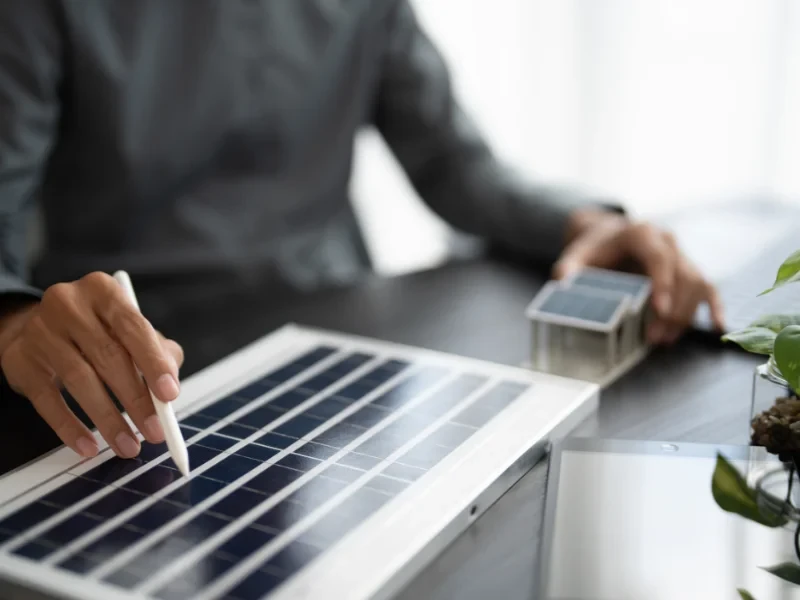
Polycrystalline Panels: Where They Still Make Sense
Polycrystalline panels are one of the older types of solar panels. They are made from many pieces of silicon melted together. This process is simpler, which is why these panels often cost less.
Even though they are not as popular today, polycrystalline panels are still one of the solar panel types you may see when comparing options.
Advantages of polycrystalline solar panels
Polycrystalline panels offer a few benefits:
- They usually cost less upfront
- They are reliable and proven over time
- They work well when roof space is not limited
For some homeowners, the lower price makes this solar panel type attractive.
Disadvantages of polycrystalline solar panels
Polycrystalline panels also have some drawbacks:
- They are less efficient than monocrystalline panels
- They need more roof space to produce the same power
- They may not perform as well in very hot weather
Because of these limits, many people now choose newer solar panel types instead.
When polycrystalline panels are a good choice
Polycrystalline panels can still make sense if you have a large roof, plenty of sunlight, and a lower budget. If you can get a good price and space is not an issue, this type of solar panel may still work well for your home.
Thin-Film Solar Panel Types: CdTe, CIGS, and Amorphous Silicon
Thin-film panels are another option among the types of solar panels, but they are less common for homes. These panels are made by placing very thin layers of material on a surface like glass or metal.
Thin-film solar panel types are lighter and more flexible than other panels, which makes them useful for special situations.
CdTe thin-film solar panels
CdTe panels use a material called cadmium telluride. This solar panel type works well in hot weather and can produce steady power during the day.
These panels are often used for large solar projects, but they are not very common on homes.
CIGS thin-film solar panels
CIGS stands for copper indium gallium selenide. This type of solar panel can be lighter and sometimes flexible.
CIGS panels can work well in low light, but they usually cost more and are harder to find than other solar panel types.
Amorphous silicon solar panels
Amorphous silicon panels were one of the first thin-film solar panel types. They are very lightweight but produce much less power.
Because they are less efficient, they are now rarely used for home solar systems.
When thin-film panels make sense
Thin-film panels may be a good choice if your roof cannot support heavy panels or if you need a flexible design. For most homes, however, other types of solar panels offer better performance.
Key Differences That Matter More Than Panel Type
When comparing types of solar panels, many people focus only on the panel name. While panel type is important, other factors can matter just as much. These details affect how much power your system makes and how much money you save.
Solar panel efficiency
Efficiency shows how well a panel turns sunlight into electricity. Higher efficiency panels make more power in less space.
If your roof is small, choosing high-efficiency solar panel types can help you get the most energy possible.
Temperature performance
Solar panels lose some power when they get hot. This is normal.
Some solar panel types handle heat better than others. If you live in a hot area, heat performance can affect how much power your system makes each year.
Panel lifespan and warranties
Most solar panels are made to last many years. Good solar panel types come with long warranties that promise steady power over time.
Always check how much power the panel is expected to produce after 20 or 25 years.
Roof shade and system design
Shade from trees or nearby buildings can lower solar power. In some cases, the right inverter or system design matters more than the type of panel you choose.
Which Types of Solar Panels Should You Choose? (Decision Guide)
Choosing between different types of solar panels can feel confusing. The best choice depends on your roof, your budget, and how much power you need. This simple guide can help you decide which solar panel types are right for you.
Choose monocrystalline solar panels if
Monocrystalline panels are a good choice if:
- Your roof space is limited
- You want the most power from fewer panels
- You plan to stay in your home long term
Choose polycrystalline solar panels if
Polycrystalline panels may work well if:
- You have a large roof with plenty of space
- You are working with a lower budget
- You find a good deal on these panels
Choose thin-film solar panels if
Thin-film panels may be the best choice if:
- Your roof cannot support heavy panels
- You need flexible or lightweight panels
- You have a special roof design
A quick checklist before choosing solar panels
Before you decide, make sure you:
- Check your roof size and sunlight
- Compare energy output, not just panel size
- Review warranties and lifespan
- Work with a trusted solar installer
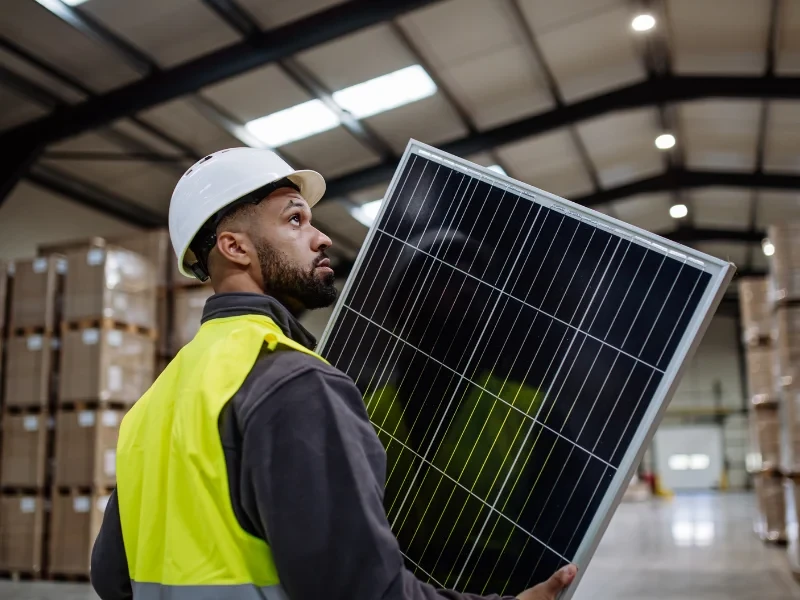
Cost, Value, and Payback by Solar Panel Type
The cost of solar depends on more than just the types of solar panels you choose. Price, value, and long-term savings all matter when comparing solar panel types.
Upfront cost of solar panels
Some solar panel types cost more at the start. Monocrystalline panels usually have a higher price, while polycrystalline panels often cost less. Thin-film panels can vary in price based on design and availability.
A lower price does not always mean better value.
Long-term value and savings
The real value of solar comes from how much power your system produces over time. High-quality solar panel types may cost more at first but can save you more money in the long run.
Panels that produce more energy and last longer often give better results over 20 or 25 years.
Payback time explained
Payback time is how long it takes for your solar system to pay for itself through energy savings.
Solar panel types that produce more power can shorten your payback time, especially if electricity prices are high in your area.
How to compare solar quotes
When comparing quotes, look at:
- Total system cost
- Expected yearly energy production
- Panel warranty length
- Installer experience
Common Mistakes When Comparing Types of Solar Panels
Many homeowners make simple mistakes when choosing between types of solar panels. Avoiding these errors can help you get better results from your solar system and save more money.
Focusing only on panel wattage
Some people choose panels just because they have a high watt number. While wattage is important, it does not tell the full story. Different solar panel types perform differently based on heat, shade, and roof layout.
Ignoring roof conditions
Your roof angle, direction, and shading matter a lot. Even the best types of solar panels can underperform if your roof is not considered during system design.
Not checking warranties
Not all warranties are the same. Some solar panel types offer longer and stronger performance promises than others. Always read the warranty details before making a decision.
Choosing based on price alone
The cheapest option is not always the best option. Low-cost solar panel types may produce less power or wear out faster, which can reduce long-term savings.
Skipping professional advice
Solar systems should be designed for your home, not copied from another project. Getting expert help can make sure the solar panel type you choose fits your needs.
Recommended Next Step: Get Help Choosing the Right Solar Panel Type
Learning about the types of solar panels is an important first step. But choosing the right system can still feel overwhelming. There are many solar panel types, system designs, and price options to compare.
That is why many homeowners choose to speak with a solar expert before making a final decision. A professional can review your roof, energy use, and budget to help you choose the right panels for your home.
If you want clear guidance without pressure, you can start by visiting https://joinsunnow.com/. The platform helps homeowners understand their solar options and compare solutions that fit their needs.
Getting expert advice can help you avoid mistakes, choose the right solar panel type, and feel confident about your investment.
Frequently Asked Questions About Types of Solar Panels
What are the main types of solar panels?
The main types of solar panels are monocrystalline, polycrystalline, and thin-film. Monocrystalline panels are the most popular today because they produce more power in less space. Polycrystalline panels cost less but need more room. Thin-film panels are lighter but usually make less power.
Which solar panel types are best for small roofs?
For small roofs, monocrystalline solar panel types are usually the best choice. They are more efficient and can produce more electricity using fewer panels.
Do thin-film solar panels work better in hot weather?
Some thin-film solar panel types handle heat better than others. However, they usually need more space and are not common for homes.
Are polycrystalline panels still worth buying?
Polycrystalline panels can still be worth buying if you have a large roof and find a good price. For most homes, newer types of solar panels offer better long-term value.
What matters more: panel type or system design?
System design often matters more than panel type. Even the best solar panel types need proper placement, good sunlight, and the right inverter to work well.
How long do solar panels last?
Most solar panel types are designed to last 25 years or more. Many panels continue producing power well beyond their warranty period.
Conclusion: Choosing the Right Types of Solar Panels for Your Home
Choosing between different types of solar panels does not have to be hard. Once you understand how each option works, it becomes easier to pick the right solution for your home.
Monocrystalline panels are the most popular solar panel types because they produce more power in less space and last a long time. Polycrystalline panels can still work well if you have a large roof and a lower budget. Thin-film panels are best for special cases where weight or flexibility matters.
The best choice depends on your roof size, sunlight, energy use, and budget. Panel type is important, but system design, warranties, and installer quality also play a big role.
If you want help choosing the right solar panel type for your home, a trusted solar expert can guide you through the process. You can start by visiting https://joinsunnow.com/ to explore your options and get clear advice before going solar.