Australia’s energy storage market is growing, and Sungrow is making another big move.
On November 6, 2026, during All-Energy Australia in Melbourne, Sungrow signed distribution agreements with three Australian partners: Solar Juice, Supply Partners and Raystech Group.
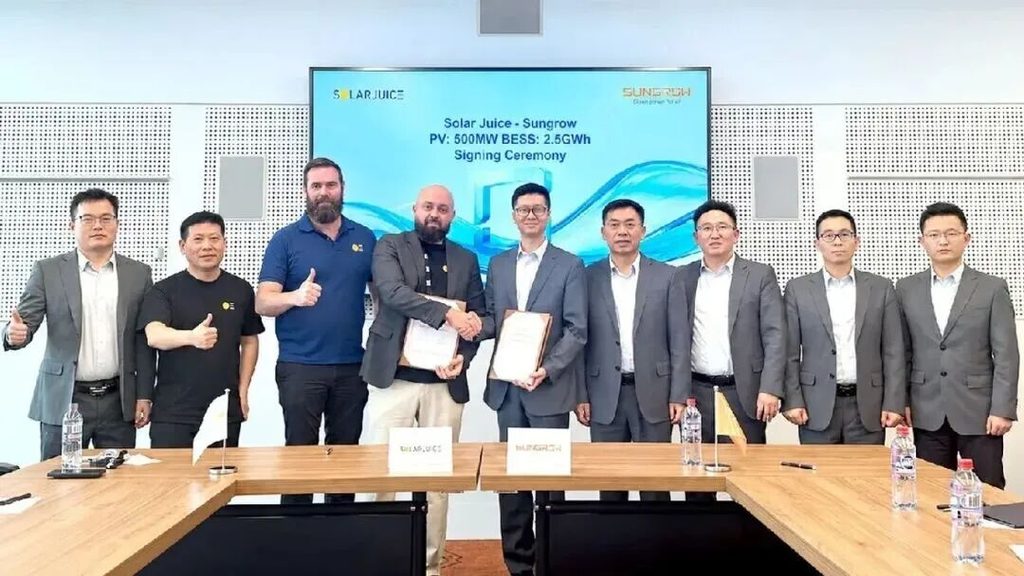
The agreements cover 4GWh of battery energy storage systems (BESS) and 1.5GW of solar PV.
For the Sungrow energy storage Australia market, this is an important development. But what caught our attention is not just the 4GWh figure. It is how the storage capacity is divided between residential and commercial applications.
1. How Is the 4GWh BESS Capacity Distributed?
The three agreements have different allocations:
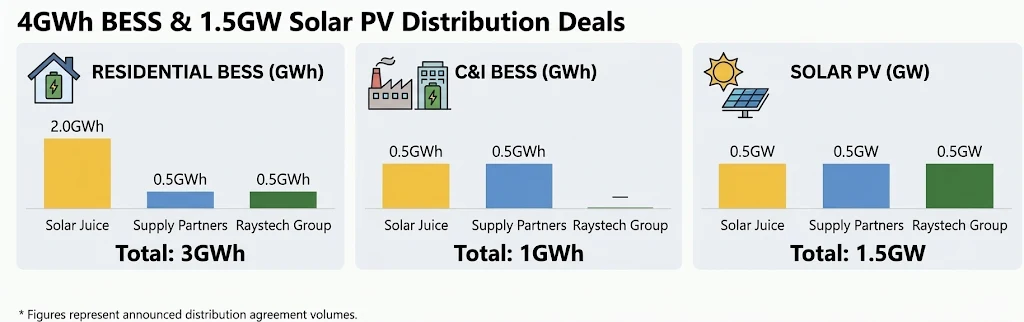
Residential storage accounts for 3GWh, while commercial and industrial (C&I) storage accounts for 1GWh.
This tells us something important: home battery storage remains the main driver, but C&I energy storage is becoming a bigger part of Australia’s market.
These figures represent distribution agreement volumes, not completed deliveries. Actual demand and delivery schedules will be worth watching.
2. Why Is Australia’s Battery Storage Market Worth Watching?
Australia already has a strong rooftop solar market. However, solar panels mainly generate electricity during the day, while many households use more power in the evening.
A residential battery energy storage system helps store excess daytime solar energy for later use. This can increase solar self-consumption and help households manage electricity costs.
Government incentives are also supporting the market. Australia’s Cheaper Home Batteries Program has made battery installation more attractive for eligible households.
But residential storage is only part of the story.
For factories, warehouses and commercial buildings, C&I battery storage can help manage peak demand, reduce electricity costs and make better use of rooftop solar.
Of course, the right system depends on the customer’s electricity consumption, tariff structure and project requirements. A larger battery does not automatically mean a better return.
3. Sungrow Is Expanding Beyond Residential Storage
Another development worth mentioning is the Hazelwood Battery Energy Storage System expansion in Victoria.
Sungrow is supplying a 150MW/300MWh BESS for the project, working with ENGIE and Elecnor.
The system includes PowerTitan 2.0 battery storage units, PCS equipment and the EMS3000 energy management system. Commercial operation is targeted for 2028.
Together with the latest distribution agreements, this shows Sungrow’s presence across three important segments:
- Residential battery storage
- Commercial and industrial energy storage
- Utility-scale BESS projects
Each application has different technical requirements, but all contribute to Australia’s growing demand for flexible energy storage.
4. What Does This Mean for Solar Distributors and Buyers?
From a distributor’s perspective, the biggest opportunity is not simply selling more batteries.
It is understanding what customers actually need.
Residential customers may focus on battery capacity, inverter compatibility and installation costs. C&I customers usually care more about electricity savings, peak demand management and long-term project returns.
Before choosing a BESS supplier, buyers should also consider product certifications, warranty conditions, local technical support and delivery reliability.
These details matter just as much as the product price.
Our Take
The 4GWh Sungrow distribution agreements are worth watching, not only because of their size, but because they reflect a changing Australian energy storage market.
Residential batteries remain the foundation, while C&I storage is gaining momentum. Meanwhile, utility-scale projects such as Hazelwood show that large battery systems are becoming increasingly important for grid integration.
At Joinsun, as a Sungrow distributor, we believe the future of energy storage is not about selling one standard solution to every customer. It is about matching the right system to the right application.
We will be keeping an eye on how these agreements translate into actual deliveries and new project opportunities in Australia.
The real story is not just 4GWh of announced capacity. It is how the market turns that capacity into real installations.