High-Altitude Solar Panels 2026: Performance Guide & Optimization
Solar panels up in the mountains face some wild conditions—sometimes it’s a boost, sometimes it’s a hassle. The thinner air lets more sunlight hit your panels directly, but lower pressure messes with how your equipment runs and how well heat escapes from the system.
Understanding these quirks helps you pick the right gear and nail your system design.
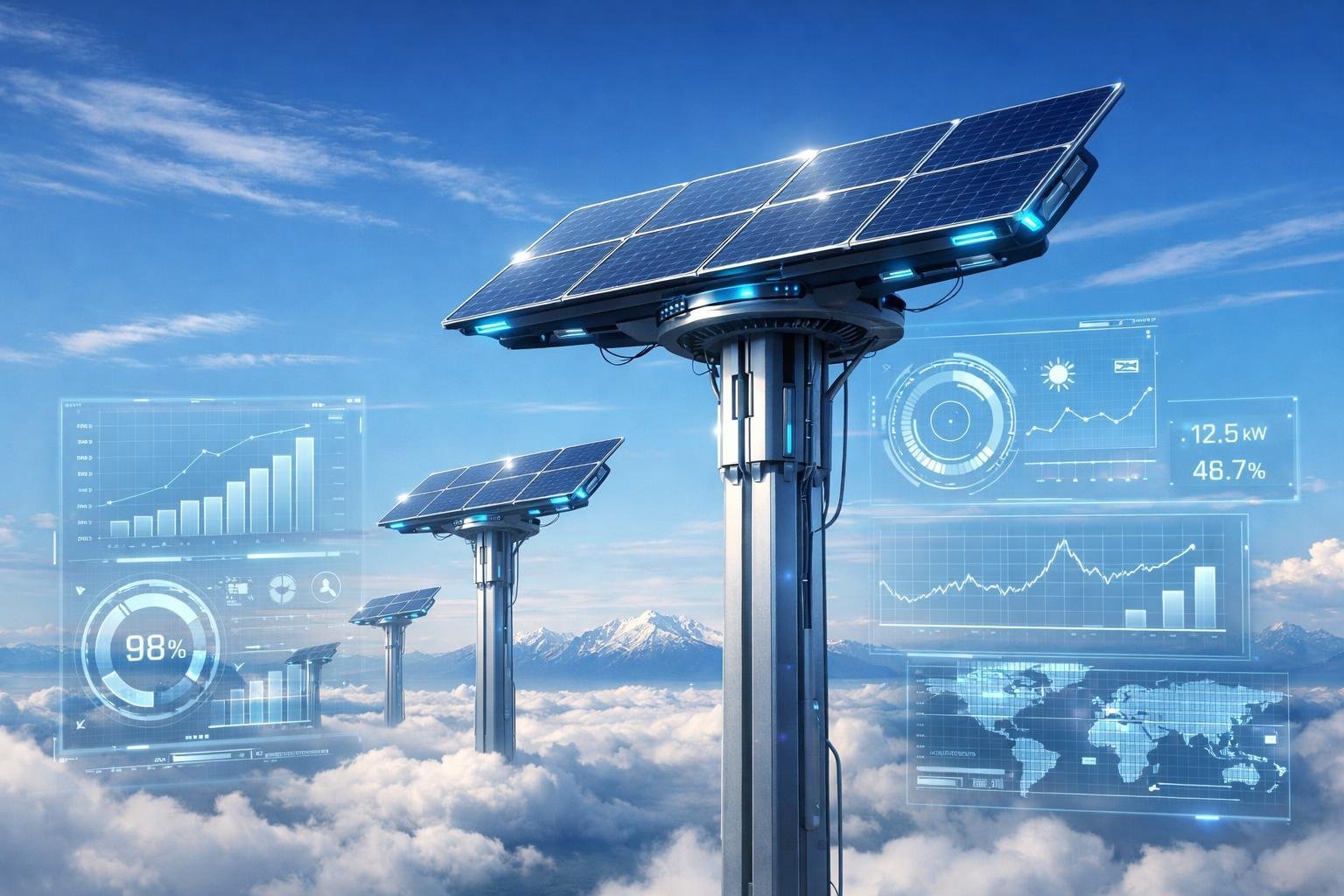
At higher elevations, your solar panels can soak up 15-20% more sun than at sea level, but you’ll need to tweak voltage ratings and rethink cooling since the air’s so thin and temps swing fast.
With less air up there, sunlight isn’t blocked as much—great for energy, right? But it also means your inverters act differently, heat doesn’t leave as easily, and your mounting gear needs to be beefier.
Once you get above 1,500 meters, you’re in a different ballgame. More UV, bigger temperature swings, and snow loads (if you’re unlucky) all come into play.
This guide digs into the science of high-altitude solar performance and offers real-world tips for getting the most out of your setup.
Key Takeaways
- Higher elevations give your panels more sun thanks to thinner air, so you can get more juice out of them.
- You’ll need to tweak your system—think voltage derating and better cooling—to keep everything running smoothly.
- Picking the right gear and using install tricks made for elevation will help your system last and perform its best.
High-Altitude Solar Panel Performance Fundamentals
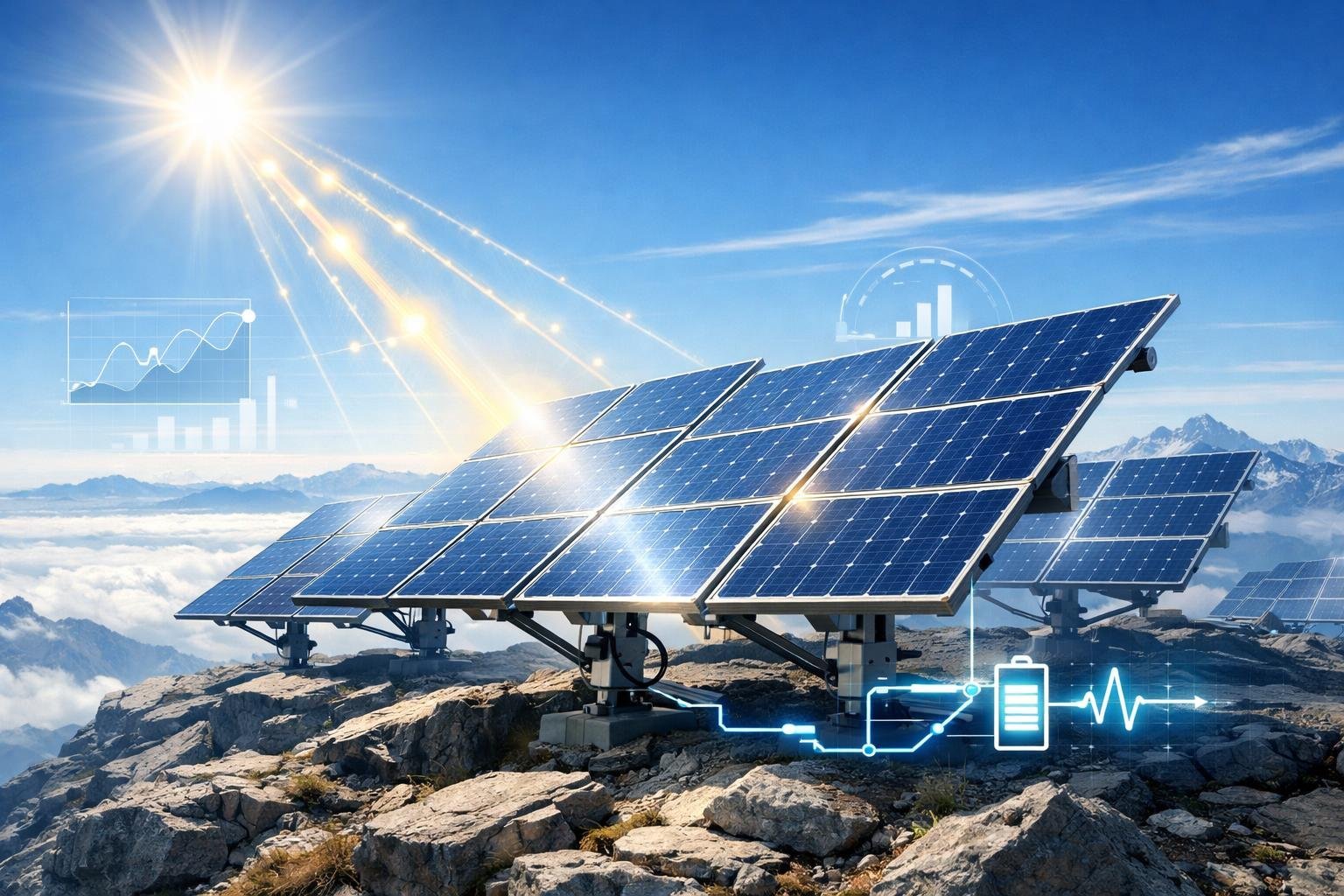
Solar panels way up in the mountains don’t play by the same rules as panels at sea level. You’re dealing with different air pressure, wild temperature swings, and much stronger sunlight.
The higher you go, the more these factors shift, and your system’s performance profile changes with them.
Solar Radiation and Irradiance at Elevation
Panels at altitude bask in more intense solar radiation since sunlight doesn’t have to push through as much atmosphere. The thin air means there’s less stuff to scatter or soak up the sun before it gets to your PV panels.
Solar irradiation climbs by about 7-12% for every 1,000 meters you go up. That’s because the air gets thinner, so less sunlight gets filtered out.
High elevations also mean more UV hitting your panels. It’s not always a one-to-one energy gain, but you do get more raw sunlight to convert.
Research from sites between 3,900 and 4,500 meters shows clear gains in sun exposure compared to lower spots.
Panels up high grab this extra sun best when the weather’s clear. Mountain skies usually have less haze and pollution, so your system gets a nice boost.
Temperature Effects and Panel Efficiency
Cold mountain air actually helps your panels work better. PV panels lose efficiency as they heat up—usually about 0.3-0.5% for each degree above 25°C.
With mountain installs, your panels stay cooler and closer to their sweet spot. That cooler climate can bump up performance by 10-15% compared to hot, lowland locations, especially when the sun’s blazing.
Studies in the mountains show Performance Ratios from 73.73% to 88.64%. Higher spots with cooler temps usually land at the top end.
This temperature edge sticks around all year. Even in summer, the cool air stops your panels from losing efficiency like they do in hot places.
So, you get the best of both worlds: strong sun and cool temps for max energy conversion.
Direct Solar vs. Diffuse Radiation in Mountain Regions
At altitude, direct sunlight rules. Panels get a stronger, more focused energy source.
Lowland sites deal with more diffuse light from clouds and particles, but up in the mountains, you get a bigger dose of direct sun.
This change in sunlight mix affects your output all year. Spring and summer are especially good for high-altitude solar, sometimes making up for weaker winter production.
Your system grabs direct radiation more efficiently than diffuse. At elevation, up to 80-90% of your sunlight is direct, versus 60-70% at sea level on a clear day.
This lets high-altitude panels keep cranking out steady power during peak hours.
Key Design and Material Considerations for High-Altitude Installations
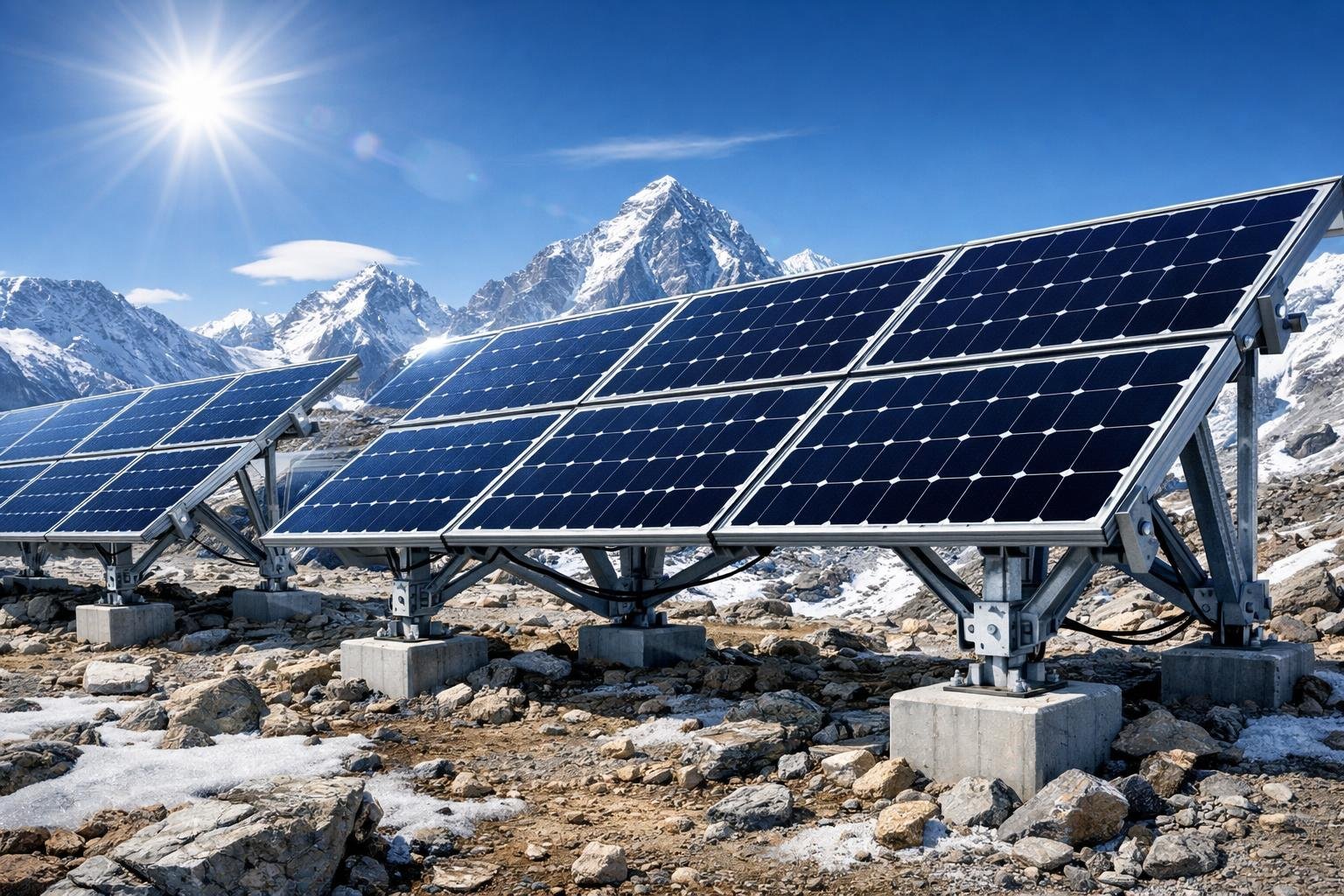
High-altitude installs call for panels made from tougher stuff—materials that can shrug off UV, handle wild temperature swings, and survive snow loads up to 7200 Pa.
You’ll need to tweak voltage settings for the thin air and pick modules with solid temperature coefficients to get the most out of your system.
Module Selection and Efficiency Ratings
Picking modules for mountain installs starts with knowing that standard test conditions (STC) don’t really match what’s happening up there. STC assumes sea-level air at 25°C and 1000 W/m², but you’re dealing with thinner air and 15-25% more sunlight.
Go for panels with efficiency over 21% from brands like LONGi or JinkoSolar, especially ones tested at elevation. These companies now share altitude-specific data, which is a relief.
You might want to look at bifacial modules that grab extra light reflected off snow—they can bump up your output by 10-30%.
Check for panels tested under IEC 62938 for uneven snow loads. That way, you know your panels can take what the mountains throw at them.
Temperature Coefficient and Voltage Adjustment
Temperature coefficient matters more the higher you go, since your panels will see real cold. A coefficient of -0.29%/°C means you get 0.29% more power for every degree below 25°C.
At -20°C, that’s a 13% boost over STC ratings—not bad.
But here’s the catch: lower air pressure means you have to watch your system voltage. Thinner air drops insulation strength between wires, raising arc-flash risk.
Give your conductors more space and use components tested for high impulse voltage.
Expect your open-circuit voltage to rise 15-20% in the cold. You’ll need inverters and charge controllers that can handle those higher voltages, especially on freezing mornings when panels spike.
UV Exposure and Material Durability
UV radiation jumps by about 10-12% for every 1000 meters you climb, so you need materials that won’t break down.
Standard encapsulation films can fail in 5-7 years at altitude, but dual-layer POE (polyolefin elastomer) keeps going for 25+ years.
Look for encapsulation films tested to handle 800+ kWh/m² of UV—way above standard requirements. These materials stay flexible and stick together, so you don’t get delamination or micro-cracks.
Back sheets and junction boxes need tough polymers like polyphenylene ether, which stay bendy below -40°C. PVC gets brittle and cracks in freeze-thaw cycles, and you don’t want that. Make sure your wire insulation is UV-resistant too, so it doesn’t fail after years in the sun.
Snow Reflectance and Heavy Load Mitigation
Snow’s reflectance (albedo effect) can crank up your winter output by 20-40%. You can take advantage of that by tilting your panels steeper—45-60 degrees works well and helps snow slide off.
Your mounting gear has to handle uneven snow piles, sometimes up to 3 meters deep (7200 Pa). Regular frames rated for 2400 Pa just won’t cut it—they’ll buckle under heavy, wet snow.
Go with reinforced aluminum frames and add extra cross-bracing to spread out the load.
Anti-reflective glass for high-altitude use goes through tougher bending tests. This glass shrugs off hits from ice chunks sliding off the row above. Frameless or low-profile frames can help avoid snow buildup at the edges, which is a sneaky stress point.
Installation, Operation, and Maintenance Strategies
High-altitude solar installs need a different approach—thin air, wild weather, and tricky terrain all keep you on your toes. Smart installation, system optimization, and regular checkups help your mountain solar systems keep running strong for years.
Challenges of Mountain Solar Installation
Mountain installs demand beefier engineering and extra safety steps. You’ve got to build mounts that can take snow loads over 50 pounds per square foot and winds that can hit 100+ mph.
Foundations need to go deeper and get more support than you’d use at sea level.
Working up high isn’t easy. Crews move slower with less oxygen, so jobs take longer. Moving gear over rough ground sometimes means using special lifts or even helicopters for remote spots.
Your electrical setup needs to handle voltage drops—about 1.5% lower per 1,000 meters up. That changes which inverters you pick and how you wire the system.
Don’t forget lightning protection. Mountain peaks get hit more often than lower ground, so you’ll need solid grounding and surge protection.
System Optimization for Peak Output
Your panels get more sun at altitude, but you still need to dial in your setup to catch every watt. Using multiple maximum power point tracking (MPPT) controllers lets you mix panel angles across uneven terrain and fight off shading from ridges or changing sun angles.
Pick modules with low temperature coefficients—-0.35% per °C or better. Cold mornings can bump your output by 10-15%, but you’ll want good thermal management to avoid afternoon losses.
Use climate-specific energy rating methods to get a real sense of how your arrays will perform. These take into account your local sun, temperature swings, and mountain weather.
Shade-aware inverter tech can help your system find the real maximum power points, even if you’ve got some shade from rocks or trees. That’s key for squeezing out every bit of power your mountain setup can give.
Maintenance, Monitoring, and Snow Management
You’ll want remote monitoring systems with encrypted data transmission to track solar panel performance on mountain peaks. When weather or seasonal road closures make access tough, early fault detection saves you from long periods of downtime.
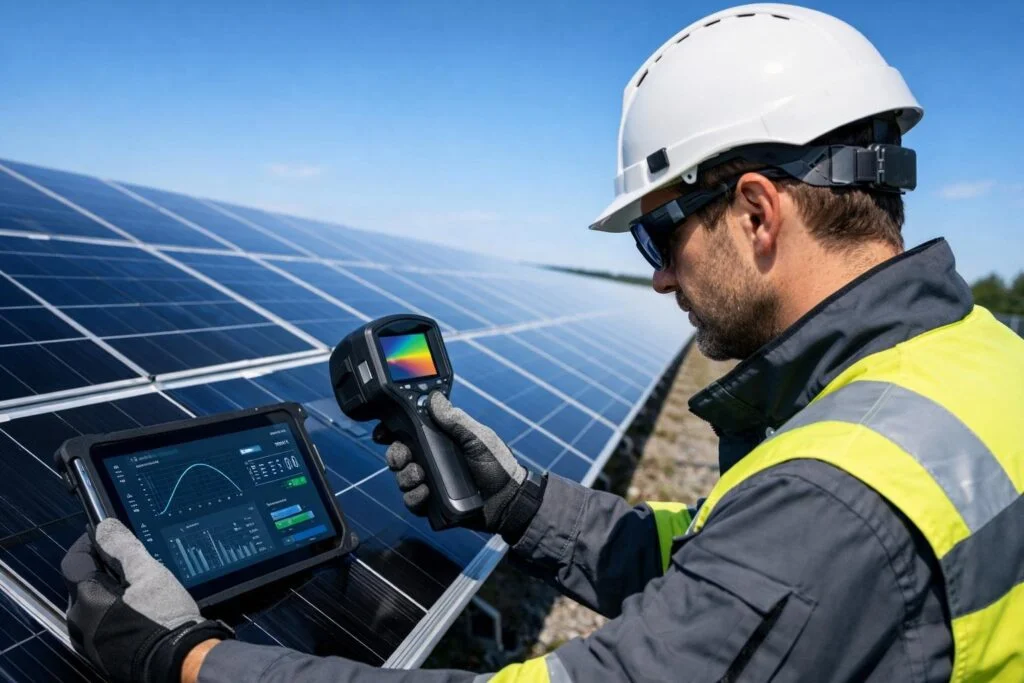
Make sure your monitoring setup includes string-level diagnostics. Thermal imaging is a smart addition, too—especially when you can’t get up there in person.
Snow accumulation is probably the biggest maintenance headache for elevated solar setups. What are your options?
- Passive systems: Steep tilt angles (45-60°) encourage snow to slide off naturally.
- Active systems: Mechanical brushes or heating elements kick in during critical snow periods.
- Hybrid approaches: Mix tilt optimization with occasional manual clearing when things get out of hand.
Plan inspections for UV-induced wear, thermal cycling damage, and micro-cracks from temperature swings. Junction boxes need drain plugs to keep moisture out.
Mount inverters and combiner boxes above the highest snow levels. Cable management should use UV-rated conduits and watertight fittings that handle temperatures from -40°F to 150°F.
Future Trends and Opportunities in High-Altitude Solar Energy
High-altitude photovoltaic tech keeps pushing ahead—think floating installations in mountain lakes, new billion-dollar markets, and real economic benefits for remote places. The environmental upside is significant, too, especially for communities far from the grid.
Floating and Hybrid PV Innovations
Floating solar arrays are starting to make sense for high-altitude reservoirs and lakes. The water cools the panels, and the extra solar radiation at elevation doesn’t hurt either.
Swiss Alps research shows floating arrays can handle tough mountain conditions. It’s not just theory—they actually work.
Hybrid systems are catching on fast. By combining solar with other renewables, you get steadier energy production even when sunlight is unpredictable.
Engineers keep coming up with new mounting systems for heavy snow and wild weather. These upgrades make solar power possible in places that would’ve been off-limits before.
Environmental and Economic Impact
High-altitude solar delivers clean energy to remote spots without building miles of power lines. That means lower costs and less disruption in fragile mountain ecosystems.
When you invest in these systems, you help remote communities become more energy independent. The cooler air at elevation helps panels work more efficiently than those baking in the lowlands.
Performance ratios in the mountains usually land between 73.73% and 88.64%. That’s often better than what you get down below, even if total annual sunlight is a bit less.
Mountain solar projects also create local jobs and cut fossil fuel use in places that really feel the effects of climate change.
Emerging Markets and Research Initiatives
The high-altitude solar market hit $4.7 billion in 2025 and could reach $10.2 billion by 2033. That’s a projected annual growth rate of 11.7% as more regions jump in.
Big research projects are happening in China’s Sichuan province, with facilities running between 3,900 and 4,500 meters up. They’re testing advanced panels built just for these conditions.
Countries like Lebanon, Italy, France, and Switzerland are running studies to fine-tune solar performance at different elevations. If you’re setting up in the mountains, you’ll benefit from their findings on system design and seasonal planning.
Frequently Asked Questions
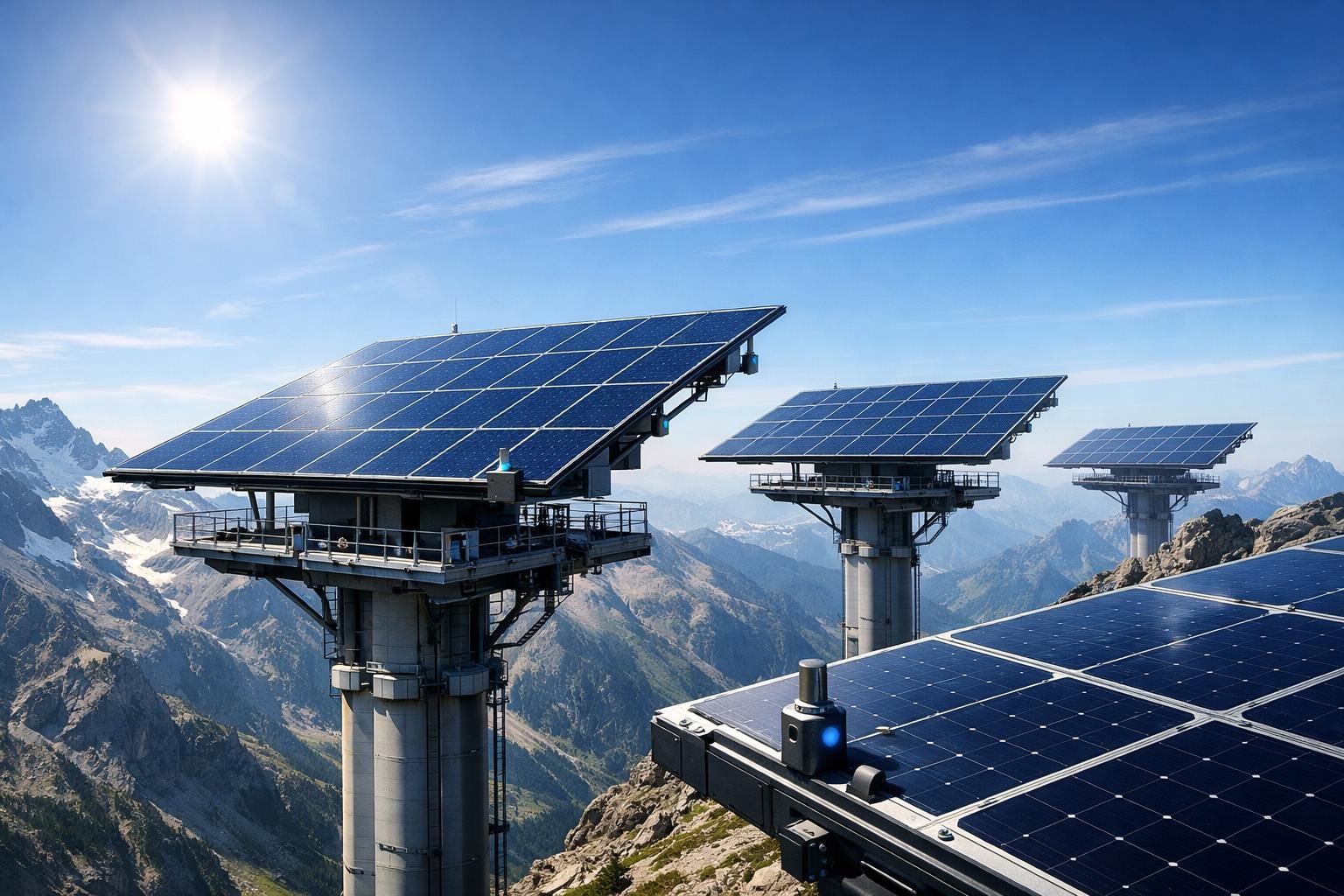
High-altitude solar panels face some unique obstacles—thin air, strong UV, and big temperature swings all change how they work and how long they last. Planning for these conditions is a whole different ballgame compared to ground-level installs.
What are the optimal conditions for operating high-altitude solar panels?
Your panels perform best up high when temperatures stay cool and sunlight is strong. The thin mountain air lets more sunlight hit your panels, but it also means less natural cooling from the breeze.
Ideally, you want your panels running between 15°C and 25°C (59°F to 77°F). Higher elevations usually keep things cool, which can bump up efficiency by 10-15% compared to hot, lowland sites.
Orientation matters a lot. In the mountains, you need to watch out for shadows from surrounding peaks.
Snow reflection can give you up to 20% more energy in winter. The catch? You’ve got to keep snow from piling up on the panels, either by tilting them or using heating systems.
How do advancements in technology by 2026 impact the efficiency of high-altitude solar panels?
Panels in 2026 use materials that shrug off UV damage way better than old models. They don’t degrade as quickly under harsh sunlight.
Temperature coefficients have improved, too. Most new panels lose only about -0.26% efficiency per degree Celsius, compared to -0.45% in the past.
Anti-reflective coatings now grab more light in thin air. That means your panels turn more sunlight into electricity, even at elevation.
Bifacial panels have gotten cheaper and more effective lately. They can grab reflected light from snow and pale terrain, boosting energy production by 15-25%.
What are the key factors influencing the longevity and maintenance of high-altitude solar systems?
UV exposure breaks down panel materials faster up high. You need UV-resistant encapsulation and backsheet materials to keep performance steady for 25-30 years.
Temperature swings cause expansion and contraction, which leads to microcracks in the cells. Go for panels rated for -40°C to +85°C if you want them to last.
Snow loads are no joke, so your mounting systems and panel frames have to handle heavy weights—5,400 Pa or more in most mountain areas.
Wind gets stronger with altitude and can wreck poorly secured systems. Make sure your hardware is rated for winds over 200 km/h if you’re in an exposed spot.
Getting up to remote sites for maintenance isn’t easy. Plan for annual inspections and rely on remote monitoring to catch problems early.
How does the performance of high-altitude solar panels compare to traditional ground-level installations?
High-altitude sites often show Performance Ratios between 73.73% and 88.64%. Ground-level systems in hot places usually fall somewhere between 70-80%.
Annual energy output at altitude depends on both higher efficiency and available sunlight. Some sites up high produce 5-10% more energy per installed watt than those at lower elevations.
Seasonal swings are a lot bigger in the mountains. You’ll see peak production in spring and summer, while lowland sites tend to be steadier all year.
Solar irradiation can actually be up to 17.2% higher at lower altitudes overall. But the efficiency boost from cooler mountain air often makes up the difference.
Capacity Utilization Factor jumps around more by season at high altitudes. Winter might drag things down with snow and short days, but summer can blow past low-altitude performance.
What are the environmental considerations associated with the deployment of high-altitude solar panels?
Your install affects mountain ecosystems differently than flatland projects. These environments have delicate plants and wildlife, so site planning takes extra care.
Building on steep slopes can cause erosion if you’re not careful. You need solid ground prep and erosion control to avoid long-term damage.
Panel glare sometimes messes with wildlife behavior and migration. Try to angle your arrays so they don’t reflect too much light toward sensitive areas.
Large solar arrays can change how water runs off the mountainside. Keep your site’s natural drainage in mind to prevent flooding or soil washout.
Taking down high-altitude sites is its own challenge. Plan ahead for panel removal and restoration, especially since access and weather windows are limited up there.
How is energy storage and transfer managed for high-altitude solar panel systems?
Battery systems at high altitude need special thermal management to function in extreme cold. Lithium-ion batteries just don’t perform well below -20°C unless you add heating systems.
You’ll need to size your energy storage to handle those long winter nights. Multi-day weather events can really stretch your backup, so most high-altitude setups plan for 3-5 days of power on reserve.
Transmitting power from a remote mountain site isn’t simple. Voltage planning gets tricky because the thin air up there makes air gaps in electrical equipment less effective as insulators.
Inverters lose cooling efficiency above 2,000 meters. It’s a good idea to pick inverters rated for higher altitudes, or maybe just oversize them to play it safe.
Connecting to the grid gets expensive fast the farther you go, especially over rough terrain. Honestly, off-grid systems with local storage often end up cheaper than dragging transmission lines through the mountains.